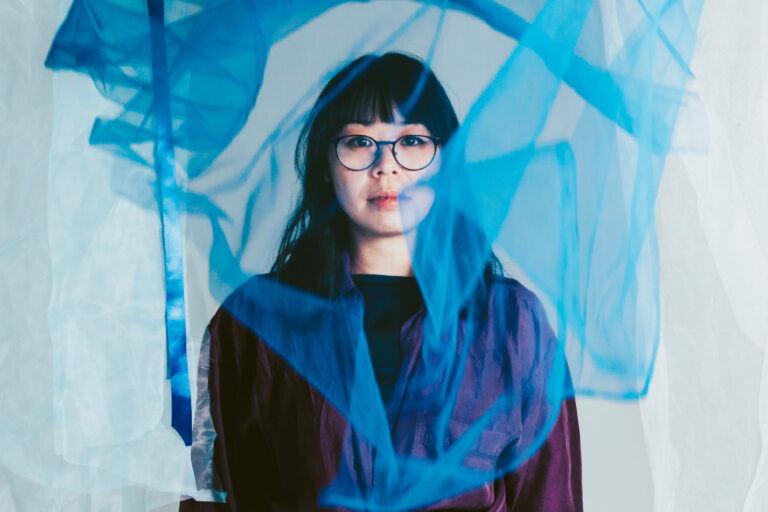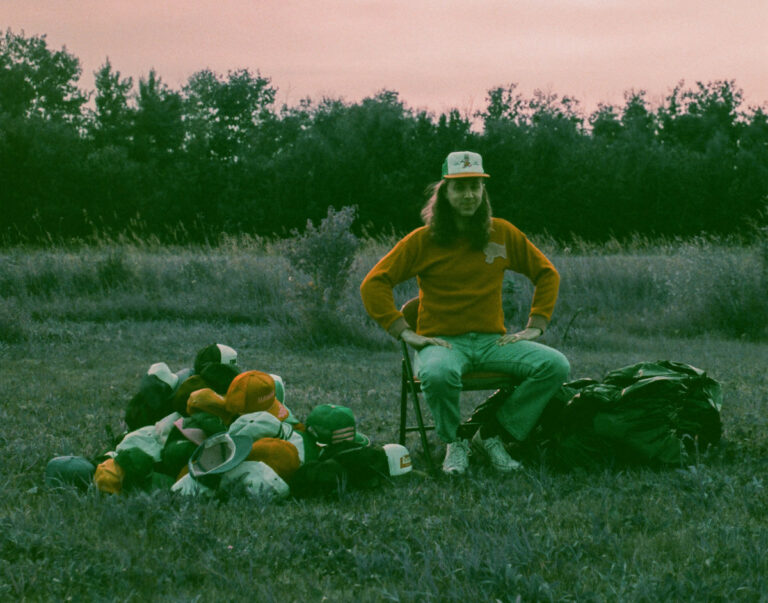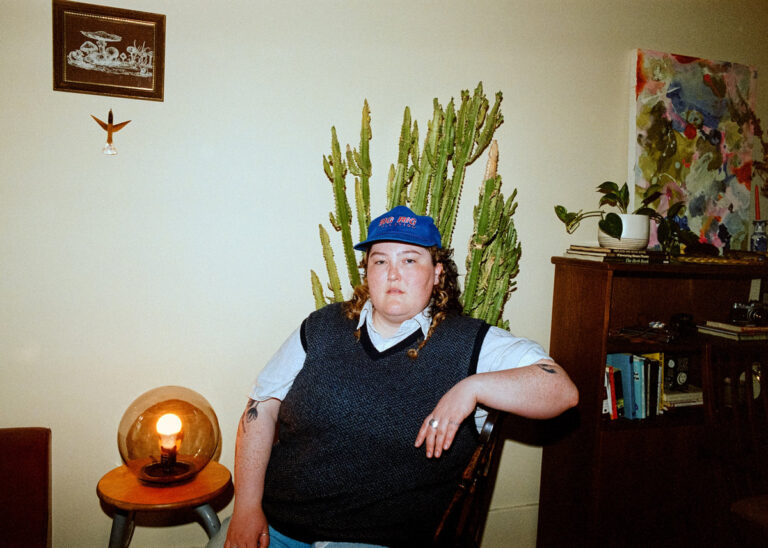
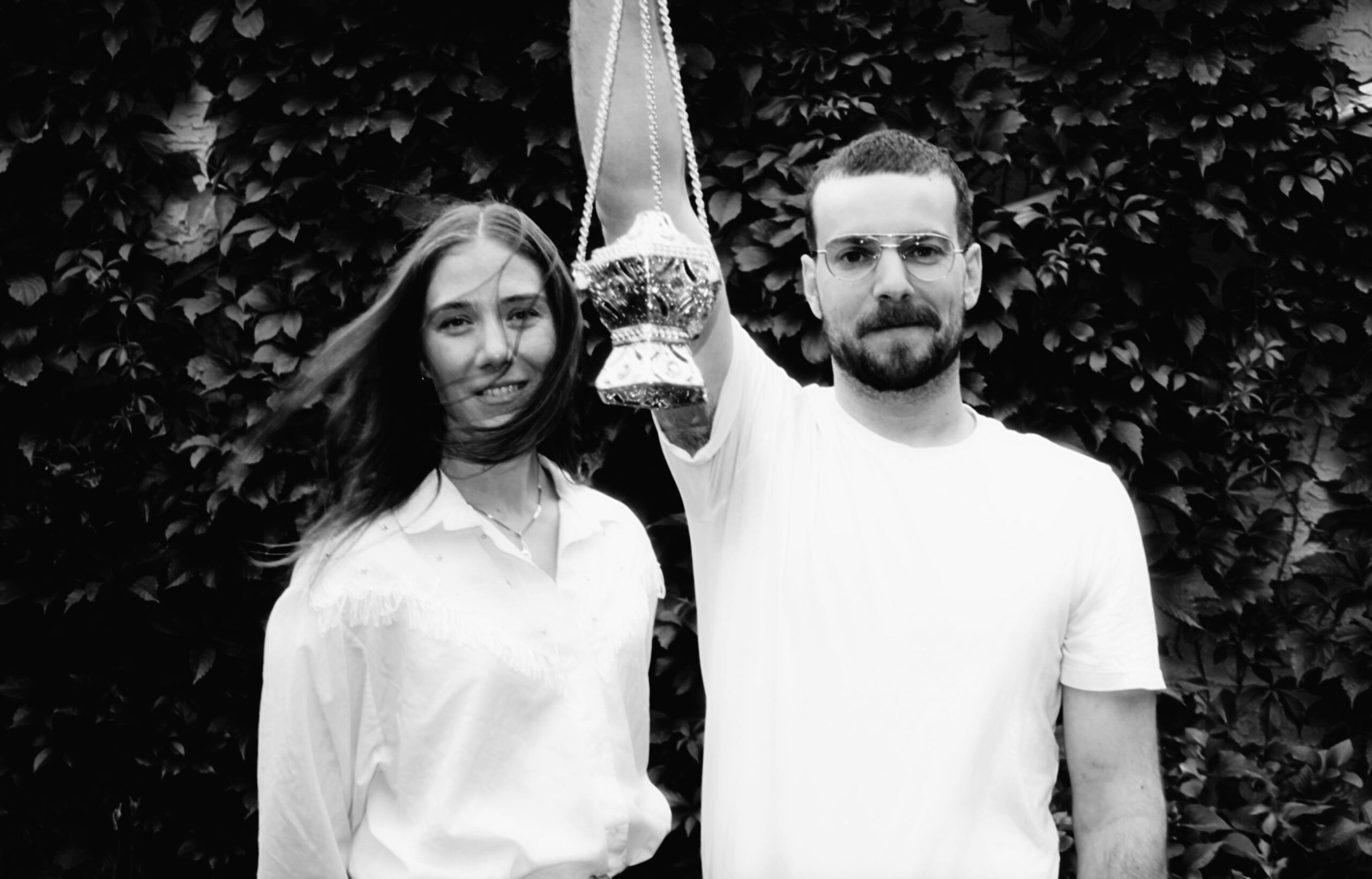
In July, I had the pleasure of spending time with Stephen Levko Halas and Jodi Plenert of Tired Cossack, who were kind enough to let me experiment with some photographs in my garage while we talked about what it means to grow up Ukrainian on the Canadian prairies and the local music scene. Later, Stephen followed up with thoughtful reflections on making ZIMA, the influence of Ukrainian culture and language, and some of our shared experiences with cancer treatment and how those experiences have shaped the process of creating music. The interview has been edited for clarity and concision.
Stylus: As someone who has watched all of you on stage, I’ve noticed a playful, supportive connection among you all. I’m curious about your family connections and how Tired Cossack became a band.
Stephen Levko Halas (SLH): So there’s me, Stephen Levko Halas. I sing, I play guitar, and I write the songs. Jodi Plenert sings and plays keyboards, Frank Halas plays guitar, Dan Robidoux plays bass, and Jony Bailes plays drums. Growing up, my brother Frank, my cousin Jony, and I always played music together. We would always jam in Jony’s parents’ basement; it really brought us closer as a family. I think it helps to have that natural, familial friend connection. We have the same taste, same sensibilities, and when Jodi and I crossed paths, it added another element. Jodi was a very accomplished musician in her own right before we met. She joined in to play cover sets, and once it came time to start performing my own songs live. Everyone loves performing, so it was a natural way to come together and play these songs.
Stylus: Your Ukrainian heritage is very much a part of your music and art. Can you tell me about your family?
SLH: My parents are Deenie and Joe, and they’re from the North End; both are Ukrainian families. My mom grew up in the Arnes, Cooks Creek area. My dad’s family has been in the North End for generations. They owned a hardware store called Halas Hardware for decades, near Mountain and McGregor in the North End of Winnipeg.
Stylus: I’m always so curious about how band members’ influences blend to create a sound unique to their band. What is the writing process like for Tired Cossack, and how are decisions made surrounding arrangements and sounds?
SLH: The writing process is very much just me; I actually write, compose, and record everything except for drums; Jon is more involved. I’ll have something in mind and kind of work as a conductor, but it’s very much a solo project. That said, when we do play live, I have such immense trust in everyone that I’m not particular about how something is played. I know it’s going to sound good live.
Stylus: ZIMA features some really exciting collaboration with Zagublena from Ukraine’s sportcafé. How did you end up connecting with sportcafé? I was genuinely overjoyed to hear darkwave/goth sounds coming out of Winnipeg, especially with tracks like “Tentacles,” “November 14,” and “Dexsomnia.” Do these songs feel rooted in a particular time and place, or is it a direction you see Tired Cossack continuing to explore?
SLH: The connection with sportcafé is that it’s very much of this time, for sure. It started with my own exploration of eastern European post-punk. I came across sportcafé, then called Pavo, from Zaporizhzhia, Ukraine. I loved Zagublena’s voice. It’s a beautiful, haunting voice; it’s low, powerful, and emotional. It was literally a Hail Mary DM that said, “Hey, I have this song I’m working on; I think you’d be perfect for the chorus.” I sent her the demo, and then she just tracked on her own. It was cool to see this kind of transatlantic collaboration, and I definitely would like to do more of it in the future.
Stylus: The lyrics in the song “Zima” sound very familiar to me. When I listen to the Ukrainian language, especially from regions where my family originates, it triggers an emotional reaction. The lyrics feel familiar to me. After reading and translating them, I realized I’ve heard this story before. Can you talk about the song and its meaning?
SLH: I think I always had a deep connection with my Ukrainian culture. I knew folktales, stories, and superstitions; it felt right to me to try to work the language into the songs. I started writing in Ukrainian straight from Google Translate. I was self-conscious about it and felt that it wasn’t authentic or whatever. I eventually realized that my Ukrainian identity isn’t dependent on anything I really do; it’s inherent no matter what. So I stopped worrying about whether my Ukrainian was perfect or made sense grammatically, and I thought it sounded good and touched on what I wanted it to. In terms of the lyrics sounding familiar to you, that’s exactly what I mean, and I felt the same thing. There’s a deeper connection to an identity that goes beyond the literal meaning of the language, you know, the translation. I think that’s so cool that you feel that because that’s exactly what you want to hear when you’re in my position. You’re putting this out there, and the fact that it resonates with people in a similar position to me is incredibly humbling, for sure, but also really rewarding, so thanks for mentioning that, actually.
Stylus: With this new album, there have been some references to your experience with cancer. Having gone through cancer treatment myself, some of the content resonated with me in a way only someone who’s experienced it could understand. The lyrics in “Cab” and “Gran Turismo” stood out to me in particular. How has your experience with cancer informed how you make music now, and how has it changed your view on what you put out into the world?
SLH: Yeah, it definitely did. It’s funny: at the beginning of my cancer journey, I knew it would affect how I was doing, but I think I was in denial about just how much it would. It had a profound impact on my music. I think you’re right that it comes through in certain songs and the feelings of hopelessness, the feelings of abject decay of losing yourself, of the spiritual damage that’s being caused to you as well as physically, mentally, emotionally.
Writing was a way to exercise and try to process, so it was something you knew I didn’t have to feel all the time. I could look back at these songs and be like, “yeah, that’s exactly how I felt.” So it had a huge, huge impact, and in terms of how I put it out to the world, it added a lot of honesty. I think I just stopped caring. I was making these songs for me. I wasn’t making them for anyone else, and there was a lot of strength I could draw from that.
Stylus: Can you tell me about your diagnosis and what it felt like the day you were told? For me, it was unexpected; I was caught off guard. The whirlwind of the next year was something I couldn’t have prepared for. What kind of impact did the experience have on how you approach your life and creative projects?
SLH: The diagnostic process for me was really fucked up. There was a lot of uncertainty. It was a lot of not having clarity, a lot of waiting, a lot of worrying, and, obviously, a lot of half-assed reassurance. I don’t blame anyone in the healthcare world; it’s just that, you know, you go through a series of tests that get more and more forensic, and every time it’s “everything is probably fine, but we just want to rule this out.” That kept happening, and then one day, there was a certain test where I just knew. Even during the biopsy, the doctor who took out one of my lymph nodes mentioned that it looked like lymphoma. That hit me. The reality of it hit me, and so much other stuff had built up, and there are so many other worries. You know what kind of cancer it would be? I was googling until four in the morning pretty much every night, everything I could, all the differential diagnoses. When I got the phone call confirming that I had Hodgkin’s lymphoma, it was almost a relief. I felt great relief, and finally knowing what I was up against, knowing that it was treatable, and now I can direct my focus to something instead of sitting in this uncertainty, and it was still traumatic. It was incredibly hard to tell my family and friends, and especially Jodi. Still, I felt a great sense of relief that that process was over. It was unlike anything I had ever dealt with, and it certainly wasn’t the worst part of it. Still, it was an apt beginning for a really brutal journey with so much emotion (fear, worry, anger, frustration) that you have nowhere to direct it because you have no clear answers.
Stylus: Early detection and prevention can save lives. What are the symptoms you think people should look out for?
SLH: If you feel bad, get looked at. If something feels bad for a while, get looked at no matter what and when you go see your family doctor, advocate for yourself. It’s very hard to do, but it’s the kind of thing where I think if I didn’t, I probably wouldn’t have caught it as early as I did. You don’t want to whip yourself up into a frenzy, but be careful. It’s scary to take the step to get tested, and if you don’t, it’s like it doesn’t exist. That’s my advice.
Stylus: Is there anything else you’d like to share?
SLH: I think it’s that I love how Winnipeg supports itself and supports each other in providing space and opportunity for people to put what they think is meaningful out there. When there isn’t space that people have available, there’s a very DIY spirit. People will make that space themselves. I see young bands coming. No one’s waiting to be permitted to put their stuff out there or play shows. They go, and they just start doing it, and the rest follows. I just want to reiterate how cool I think that is and how much I love that about Winnipeg, and to continue encouraging anyone apprehensive about making music or putting it out there. You don’t need to worry about anyone else; you just need to, if you can, go and start doing it, and whatever that looks like, whether it’s showing your friends, making voice memos, texting them or putting on little backyard shows to play these songs. It’s just the way that galvanizes people is really cool, so keep at it.
Stylus: Stephen, I really want to thank you for talking about your heritage, music and cancer experience with me. I know it can be hard to look back on what you went through, but for those receiving a cancer diagnosis, still healing from treatment and life-changing surgeries, it never really stops, no matter how far out you get. I still struggle to talk about my experience, and I appreciate your kindness and willingness to share your experience with me. Дуже дякую!